|
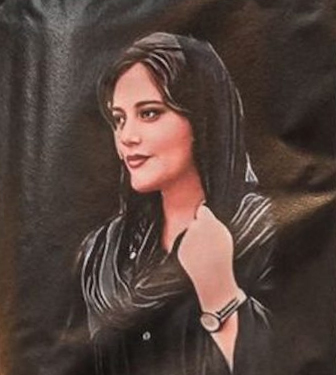
HAIL TO THE IRANIAN
WOMEN'S REVOLUTIONISTS FALLEN FOR FREDOM
against the supreme leader, the arch-reactionary
Ayatollah Ali Khomeini, and his placeman president. The message
of the women when the former president visited a university was
plain: <give way or get lost> in 2023 and still
is.
IN MEMORY OF ASRA PANAHI (16)- JINA MAMINI (22) - NIKA SHAKARAMI
(16), SARINA ESMAILZADEH (16) HADIS NAJAFI (20), AND MORE WOMEN
WHO WERE ASSASINATED SO FAR BY THE IRANIAN AXIS OF EVIL.
Click here for a total list so far
Updates Sept 18, 2025

Sisters 4 each other - Sisters 4 All
August 21 - 16,
2025
Injustice against one activist
is injustice against all activists
UPDATE
June 22, 2025
Narges
Mohammadi - with war there cannot be democracy
and
May 28 - 6 and April 17 - March 16,
2025 and earlier
reports
UN-investigation
demanded - A Global Call for Solidarity and the sanctity of
life
Actual
news of the
continues resistance of the
Sisters
4 each other, Sisters 4 All
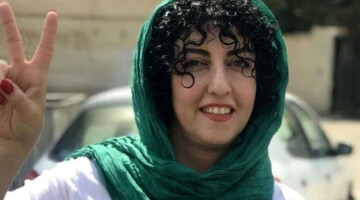
Narges
Mohammadi: "Tyranny will fall"
Pakhshan Azizi: "You dictator, I am Arash, fire responds
to fire,"
Sharifeh Mohammadi: "Finally, one day, I will sing the
song of victory from the summit of the mountain, like the
sun. Tomorrow belongs to us"
Varisha Moradi: "Resistance is life"
in
continuation of the resistance of the 4 sisters and others
Earlier reports
and
read all their previous fights
|
From
here on most Trench stories
will be embedded in the
Actual News pages
Please do read the following
earlier articles about heroines and other brave people
who risk live and limb for the women-led revolution and
no matter what they'll never give in and other stories:
click on the underlined

August
'25 topics:
August
28 - 21, 2025
the regimes two way
street waging war:
- against its own people and
- against the world
August 20-19, 2025
Divorce Surges Among
Elderly Iranians
&
Iranian Love Island: Young Singles
Mingle in Luxury Villa as Host
Defends Male Dominance
August 18 - 13, 2025
Iran
s Slaughterhouse : Inside the
Prison Where Political Prisoners
Face Slow Death
&
Iran Exports Electricity as
Power Outages Kill Citizens at
Home
&
How Israel Uses Dissident
Iranians Against the Islamic
Republic
&
Iran Uses Shia Pilgrimage to
Promote Sectarian Agenda in
Sunni Kurdish Areas
&
'Verbal Errors': How Iran's
President Sparked a Political
Crisis
And
Commemoration of the Fallen for
Freedom Part 6
and
Click here for previous
inspiring stories and articles incl. Red
Alerts
|

'New' topic: a regimes' re-newed method of
torture: denial of medical care
UPDATE: Dec. 27 - 16, 2024
The Dire Conditions of Women
in detention-A Call for International Action
Nov. 22 - Aug. 30, 2024:
Medical torture of women
during incarceration
November 4,
2024
"UN Expert Highlights
Alarming Violations Against Women and
Fundamental Freedoms..."
October 19-18 2024 - July 18, 2016
Health taken hostage
And
read here more about the
'Nurses 'strike' back':
Other
updates can be read in
the 'Actual News' section
"Nurses can neutralize
security forces' efforts with unity."
August 30, 2024
and updates:
August 28, 2024:
Nurses' demands - "A nurse
will die, but will not accept humiliation,":

|
"NO to
executions" campaign

In support - reflection and updates:
Sept. 7 - August 20, 2024
Other
updates can be read in
the 'Actual News' section
'The mullahs' regime / OHCHR*
gallows' dance'

Other
updates can be read in
the 'Actual News' section
July 8 - 4, 2024:
The-death-sentence-against-Sharifeh-Mohammadi
June 15, 2024:
Prisoner Swap with Iran is
Shameful Reward
June 5 - May 23, 2024:
It |Iran| puts people to death
in order to terrorize the population into silence.
and
other stories
*OHCHR - UN
Office of the High Commissioner for Human Rights
Click here for earlier
reports
|
actual news
Sept
18 - 17, 2025
It
goes without
saying that
the
freedom-loving
people
keep
celebrating
the third
anniversary
of Jina Aminis
death
despite the
ongoing cruel
efforts of the
regime to
crush the
ongoing
uprising

Sept
18, 2025
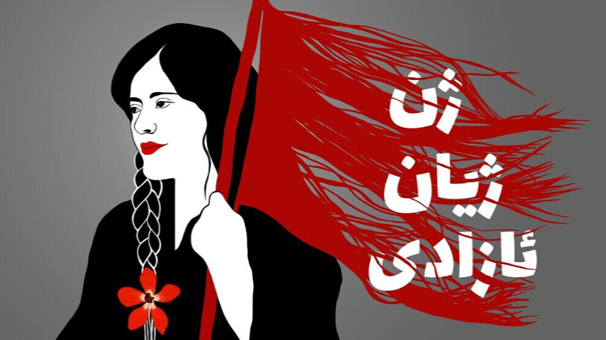
Jin,
Jiyan, Azad :
The Voice of the
People of Iran
and Eastern
Kurdistan and a
Global Discourse
&
Iran Intensifies
Crackdown on
Teachers
September
16, 2025
The
third anniversary of Jinas death
"Jina has not died. Jina has not died -
she is alive in every rebellious look, in
every frame that breaks censorship,
in every cry that demands freedom.
Jina has not died: she breathes in the eyes of
girls who let their hair blow in the wind."
|
Sept 16 - 15,
2025
More news about
the third anniversary
of Jina Aminis death
in joy and celebration
because Victory is cetain
and more actual news
|
Sept
9 - 4, 2025
World
Suicide Prevention Day
&
Bullets Rarely Miss
&
Nightmares and No Dreams
& The missing half
&
Between Music and
Politics
Sept. 3 -
August 29, 2025
Enforced disappearance as
a tool of the Islamic
Republic of Iran to erase crimes...
& Dreams on
Hold: Young Iranians Trapped
as Embassy Closures Block Path to Education Abroad
& Dual
Repression of Political Prisoners and Their Families
& Kurdish
Artist Detained in Iran Faces Health Crisis Behind
Bars
Evin prison
as a Hotspot for Warlords
Read all about
it here
|
When
one hurts or kills a women
one hurts or kills hummanity and is an antrocitie.
and: My mother (1931-1997) always said to me <Mi
figlio, non esistono notizie <vecchie> perche puoi
imparare qualcosa da qualsiasi notizia.> Translated: <My
son, there is no such thing as so called 'old' news because you
can learn something from any news.>
Gianna d'Artali.
 
Symbol of resistance of Iranian women
Narges Mohammadi - Jina Amini : "With war there cannot be
democracy"

Jina Amini Anniversary

Pakhshan Azizi and thousands more Jin, Jiyan, Azad s: The Voices
of Iran and Kurdistan
Jinha - Womens News Center - Sept 18, 2025 - By Lyndal Rowlands
and Maziar Motamedi
{Jin, Jiyan, Azad : The Voice of the People of Iran and Eastern
Kurdistan and a Global Discourse
Political activist Mehrafaq Moqemi emphasized that the "Jin,
Jiyan, Azad " movement has created a globally influential social
and cultural discourse, saying, "The slogan 'Jin, Jiyan, Azad '
was born under difficult circumstances and carries great
revolutions.
Kurdish woman Jina Mahsa Amini was murdered by "morality" police
in Tehran, Iran, on September 16, 2022. Following the outrage
over Jina Mahsa Amini's murder, a revolutionary uprising was
launched in Eastern Kurdistan and Iran, led by women, under the
slogan "Jin, Jiyan, Azad ." The murder of Jina Mahsa Amini
sparked outrage not only in Eastern Kurdistan and Iran, but also
in many countries around the world. The slogan "Jin, Jiyan, Azad
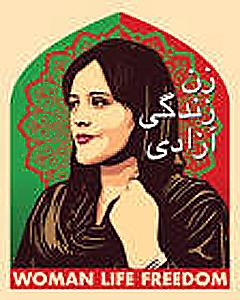
" (Woman, Life, Freedom), which rose in the wake of Jina,
transformed into a social uprising and a revolutionary movement
led by women. Political activist Mehrafaq Moqemi answered our
agency's questions on the third anniversary of the massacre.
*First of all, we would like to hear your general assessment of
the "Jin, Jiyan, Azad " revolutionary uprising. What successes
and challenges do you think this uprising has achieved in the
last three years?
This question is crucial because it addresses the issue of women
and their freedoms and fosters diverse perspectives on this
issue. The women's issue is not limited to modern or traditional
patterns; on the contrary, it gains meaning through its
relationship with women's bodies and rights in political and
social dimensions, addressing women's true aspirations from a
revolutionary perspective. The slogan "Jin, Jiyan, Azad " was
born under difficult circumstances and carries great
revolutionary potential. Even in areas under ISIS control, women
have created significant transformations by establishing
councils and carrying out collective activities. Today, this
slogan, which has spread to more than 150 cities and regions,
has resonated strongly on a global scale. The most fundamental
and universal message of this slogan is that it represents a
stand against the mechanisms of oppression and control over
women's bodies. Iran's historical experience It demonstrates
that authoritarian governments allied with capitalists always
restrict freedoms. The slogan "Jin, Jiyan, Azadi" aims to
liberate life from domination and narrow judgments by
challenging patriarchal and oppressive ideologies. Women's
presence on the stage allows them to clarify their roles
alongside the public and make their political and social demands
visible. This movement also carries a strong social dimension.
It strives to eliminate discrimination based on gender,
ethnicity, and marital status, and to break economic, social,
and political domination. The slogan "Jin, Jiyan, Azadi" has
managed to transcend traditional and abstract boundaries,
spreading both within Iran and globally.
Following this uprising, Iranian women made significant progress
through their struggle and resistance, forming a united front.
They demonstrated an active and influential presence,
particularly among young women and young men. In this uprising,
women fulfilled their leading roles, enabling them to assume
effective leadership roles for the first time. This was a
historic development for the Iranian women's movement. This
uprising, which addressed minority groups, and offered
previously marginalized segments of society an opportunity to
step forward and raise their voices. The role of the people of
Eastern Kurdistan, Balochistan, and other social groups in this
movement was clearly evident; even the middle classes actively
participated in the process. The slogan "Jin, Jiyan, Azadi"
transcended national boundaries and became a call for
resistance, inspiring global movements beyond any single ethnic
group or region. The younger generation overcame their fears,
made the resistance part of a collective process, and bravely
took the stage. This uprising created a new discourse that left
a deep mark on social memory and brought the issue of control
over women's bodies to the forefront. Despite intense
repression, systematic violence, and arrests, the movement, with
its networked and decentralized structure, was able to survive.
The slogan "Death to the Dictator" was a powerful call for
resistance, but it did not offer a clear roadmap for a
transitional process. Progressive opposition forces in the
diaspora supported this slogan; however, right-wing circles
attempted to confine the movement to a narrow political
framework, ignoring the true demands of the people. The
heightened consciousness of the masses prevented these efforts
from succeeding, and It revealed that an intellectual and
theoretical revolution had taken place. This revolution
challenged the patriarchal order and male tyranny, largely
obstructing the reproduction of these structures.
*How can popular movements, especially the "Jin, Jiyan, Azad "
movement, maintain their identity and power in the face of
political developments and regional events?
This question is crucial because it reveals the role of peoples
and popular movements in regional wars and crises. Unlike
movements based on ethnicity, religion, or nationalism, the
"Jin, Jiyan, Azad " movement: By adhering to three fundamental
principles: religion, life, and freedom, it has created an
influential social and cultural discourse on a global scale.
Despite regional wars and competition, this movement has been
able to maintain its independent path and expand its
organizational and constructive networks. The slogan "Jin,
Jiyan, Azadi" possesses a powerful revolutionary potential,
highlighting all regimes dependent on imperialist and regional
powers and pursuing the path of independence and popular will.
This movement has resonated not only in Iran but also across the
region and the world, creating a transnational network. Women
activists in Iran have established connections with women in
Kurdistan, Afghanistan, Iraq, and Lebanon, disseminating their
slogans at international events and on digital media platforms.
The movement's fundamental effort is to bring together diverse
strengths and experiences to create a common transregional
language based on freedom, social justice, and gender equality.
*What key experiences from past uprisings can inspire the
continuation of the movement?
This uprising is neither an internally nor externally imposed
project; It has truly emerged as a popular movement. People are
learning how to resist far-right movements in the realm of
social and intellectual struggle. Families play a crucial role
in preserving social memory and cultural symbols; every mother
who loses a child becomes a living symbol of the struggle. Local
commemorations and anniversaries, the active participation of
women, and the formation of local institutions and networks keep
social memory and resistance alive. Activities ranging from
retirees to students to workers' strikes strengthen the
connection between people's daily problems and the struggle for
just structures.
Local slogans and symbols play a crucial role in the solidarity
of diverse families and movements, enabling the establishment of
regional and cross-border networks. The expansion of these
networks, public participation, and efforts to globalize the
slogan "Jin, Jiyan, Azadi" will strengthen the voice of the
Iranian people in the international arena and weaken the
influence of right-wing movements and global powers. It is our
shared responsibility to strengthen these movements through the
solidarity and participation of the younger generation and to
build a free and equal future for Iranian society. Kurdish woman
Jina Mahsa Amini was murdered by "morality" police in Tehran,
Iran, on September 16, 2022. Following the outrage over Jina
Mahsa Amini's murder, a revolutionary uprising was launched in
Eastern Kurdistan and Iran, led by women, under the slogan "Jin,
Jiyan, Azad ." The murder of Jina Mahsa Amini sparked outrage
not only in Eastern Kurdistan and Iran, but also in many
countries around the world. The slogan "Jin, Jiyan, Azad "
(Woman, Life, Freedom), which rose in the wake of Jina,
transformed into a social uprising and a revolutionary movement
led by women. Political activist Mehrafaq Moqemi answered our
agency's questions on the third anniversary of the massacre.
*First of all, we would like to hear your general assessment of
the "Jin, Jiyan, Azad " revolutionary uprising. What successes
and challenges do you think this uprising has achieved in the
last three years?
This question is crucial because it addresses the issue of women
and their freedoms and fosters diverse perspectives on this
issue. The women's issue is not limited to modern or traditional
patterns; on the contrary, it gains meaning through its
relationship with women's bodies and rights in political and
social dimensions, addressing women's true aspirations from a
revolutionary perspective. The slogan "Jin, Jiyan, Azad " was
born under difficult circumstances and carries great
revolutionary potential. Even in areas under ISIS control, women
have created significant transformations by establishing
councils and carrying out collective activities. Today, this
slogan, which has spread to more than 150 cities and regions,
has resonated strongly on a global scale. The most fundamental
and universal message of this slogan is that it represents a
stand against the mechanisms of oppression and control over
women's bodies.
Iran's historical experience It demonstrates that authoritarian
governments allied with capitalists always restrict freedoms.
The slogan "Jin, Jiyan, Azadi" aims to liberate life from
domination and narrow judgments by challenging patriarchal and
oppressive ideologies. Women's presence on the stage allows them
to clarify their roles alongside the public and make their
political and social demands visible. This movement also carries
a strong social dimension. It strives to eliminate
discrimination based on gender, ethnicity, and marital status,
and to break economic, social, and political domination. The
slogan "Jin, Jiyan, Azadi" has managed to transcend traditional
and abstract boundaries, spreading both within Iran and
globally. Following this uprising, Iranian women made
significant progress through their struggle and resistance,
forming a united front. They demonstrated an active and
influential presence, particularly among young women and young
men. In this uprising, women fulfilled their leading roles,
enabling them to assume effective leadership roles for the first
time. This was a historic development for the Iranian women's
movement. This uprising, which addressed minority groups, and
offered previously marginalized segments of society an
opportunity to step forward and raise their voices. The role of
the people of Eastern Kurdistan, Balochistan, and other social
groups in this movement was clearly evident; even the middle
classes actively participated in the process. The slogan "Jin,
Jiyan, Azadi" transcended national boundaries and became a call
for resistance, inspiring global movements beyond any single
ethnic group or region. The younger generation overcame their
fears, made the resistance part of a collective process, and
bravely took the stage. This uprising created a new discourse
that left a deep mark on social memory and brought the issue of
control over women's bodies to the forefront. Despite intense
repression, systematic violence, and arrests, the movement, with
its networked and decentralized structure, was able to survive.
The slogan "Death to the Dictator" was a powerful call for
resistance, but it did not offer a clear roadmap for a
transitional process. Progressive opposition forces in the
diaspora supported this slogan; however, right-wing circles
attempted to confine the movement to a narrow political
framework, ignoring the true demands of the people. The
heightened consciousness of the masses prevented these efforts
from succeeding, and It revealed that an intellectual and
theoretical revolution had taken place. This revolution
challenged the patriarchal order and male tyranny, largely
obstructing the reproduction of these structures.
*How can popular movements, especially the "Jin, Jiyan, Azad "
movement, maintain their identity and power in the face of
political developments and regional events?
This question is crucial because it reveals the role of peoples
and popular movements in regional wars and crises. Unlike
movements based on ethnicity, religion, or nationalism, the
"Jin, Jiyan, Azad " movement: By adhering to three fundamental
principles: religion, life, and freedom, it has created an
influential social and cultural discourse on a global scale.
Despite regional wars and competition, this movement has been
able to maintain its independent path and expand its
organizational and constructive networks. The slogan "Jin,
Jiyan, Azadi" possesses a powerful revolutionary potential,
highlighting all regimes dependent on imperialist and regional
powers and pursuing the path of independence and popular will.
This movement has resonated not only in Iran but also across the
region and the world, creating a transnational network. Women
activists in Iran have established connections with women in
Kurdistan, Afghanistan, Iraq, and Lebanon, disseminating their
slogans at international events and on digital media platforms.
The movement's fundamental effort is to bring together diverse
strengths and experiences to create a common transregional
language based on freedom, social justice, and gender equality.
*What key experiences from past uprisings can inspire the
continuation of the movement?
This uprising is neither an internally nor externally imposed
project; It has truly emerged as a popular movement. People are
learning how to resist far-right movements in the realm of
social and intellectual struggle. Families play a crucial role
in preserving social memory and cultural symbols; every mother
who loses a child becomes a living symbol of the struggle. Local
commemorations and anniversaries, the active participation of
women, and the formation of local institutions and networks keep
social memory and resistance alive. Activities ranging from
retirees to students to workers' strikes strengthen the
connection between people's daily problems and the struggle for
just structures. Local slogans and symbols play a crucial role
in the solidarity of diverse families and movements, enabling
the establishment of regional and cross-border networks. The
expansion of these networks, public participation, and efforts
to globalize the slogan "Jin, Jiyan, Azadi" will strengthen the
voice of the Iranian people in the international arena and
weaken the influence of right-wing movements and global powers.
It is our shared responsibility to strengthen these movements
through the solidarity and participation of the younger
generation and to build a free and equal future for Iranian
society.} Video: https://jinhaagency.com/en/actual/jin-jiyan-azadi-the-voice-of-the-people-of-iran-and-eastern-kurdistan-and-a-global-discourse-37529?page=1

Iran Intensifies Crackdown on Teachers
Iran Human Rights in Iran - Sept 18, 2025
{Iran Intensifies Crackdown on Teachers: Dozens Arrested, Fired,
or Sentenced for Peaceful Union Activity
At Least 45 Teachers Unlawfully Targeted During Summer School
Break
The judicial proceedings and security pressures against these
teachers have been completely unlawful Iranian authorities have
intensified their crackdown on teachers and teachers union
members, with at least 45 teachers interrogated, arrested, or
sentenced since the end of the last school year in June 2025 and
the start of the new school year in September 2025, according to
new findings by the Center for Human Rights in Iran (CHRI). The
teachers have been relentlessly targeted by the state for their
peaceful advocacy and independent union activities which are
seen as prosecutable offenses in the Islamic Republic and their
demands for the release of imprisoned teachers, livable
salaries, decent working conditions, and access to free
education for all children. CHRI calls on all relevant UN
bodies, including the International Labor Organization (ILO) and
UNESCO, international teacher associations, and unions worldwide
to demand the immediate and unconditional release of all
imprisoned teachers in Iran. The arrests span several provinces,
including Kerman, Kurdistan, Gilan, West Azerbaijan, Isfahan,
and Tehran, highlighting the scope of the crackdown. Teacher
union activists report that dozens of additional cases remain
open in Iran s courts, with many educators still facing charges
related to peaceful trade union activities. The repression has
been particularly severe in smaller towns and Kurdish-populated
areas, where authorities have escalated prosecutions following
the 2022 Woman, Life, Freedom nationwide protest movement, in
which Kurdish communities heavily participated. Teachers have
long been at the forefront of peaceful protests in Iran, for
teachers rights, children s educational rights, and broader
human rights in Iran. In response, authorities have used
judicial harassment, arbitrary detention, and heavy prison
sentences to silence their voices, said Esfandiar Aban, Senior
Researcher at the Center for Human Rights in Iran (CHRI). The
Islamic Republic s persecution of teachers reflects the regime s
complete intolerance for any activity not fully controlled by
the state, let alone any peaceful dissent, and their particular
targeting of Kurdish teachers reflects their fear of the
continued resilience and independence of this community, Aban
said. In addition to the release of all imprisoned teachers,
CHRI calls on all relevant UN bodies to activate their
monitoring mechanisms and hold Islamic Republic representatives
accountable in their specialized sessions. The international
community should also demand that the Iranian authorities cease
all prosecutions of teachers and recognize the right of
independent teacher unions to organize, collectively bargain,
strike, and peacefully protest. Global teachers unions and
associations, meanwhile, should consider launching joint
international campaigns in solidarity with Iranian teachers,
beyond individual statements of support. Totalitarian regimes
fear informed citizens this is why they suppress us. Esmail
Abdi, prominent Iranian teachers rights activist
Security Forces Raid Teachers Council Meeting in Isfahan
On September 16, 2025, security forces raided a meeting of the
Coordinating Council of Iranian Teachers Trade Associations in
Shahreza, Isfahan Province, arresting 18 teachers
representatives and union activists and seizing their
belongings. According to the Coordinating Council, 17 teachers
were released after about eight hours of interrogation, but
prominent teachers union activist Masoud Farhikhteh remains in
detention. Farhikhteh was previously sentenced to over four
years in prison in August 2025 by Branch 12 of the Alborz
Province Court of Appeal for assembly and collusion against
internal security and propaganda against the regime. The
Coordinating Council said that the continued detention of
Farhikhteh raises concerns that he may be taken to prison to
serve his sentence. The arrests coincided with the heightened
state security that has surrounded the third anniversary of the
state killing of Jina (Mahsa) Amini, which triggered the Woman,
Life, Freedom protests.
The Coordinating Council of Iranian Teachers Trade Associations
said in a statement:
The Coordinating Council of Iranian Teachers Trade Associations
strongly condemns this blatant raid, stressing that the
authorities not only show zero tolerance for independent union
and collective activities, but also target teachers most basic
right to hold internal assemblies through coercion and
intimidation. The council demands the immediate release of
Masoud Farhikhteh and the prompt return of all confiscated
personal belongings, and reaffirms its commitment to defending
teachers rights.
Peaceful Protests, Harsh Punishments
Despite teachers repeatedly emphasizing that their union
activities and protests are peaceful and lawful, they continue
to face summons, arrests, forced retirements, dismissals, and
job bans. Many cases remain pending in Iranian courts, while
others are serving sentences under restrictive measures such as
electronic ankle monitors. Afshin Razmjooei, a retired teacher
from Shiraz who is serving a two-year prison sentence under
electronic monitoring for her participation in peaceful teacher
protests, told Shargh newspaper: The distance I m allowed to
travel with the ankle monitor cannot exceed one kilometer from
my residence. This year, I was able to take a teaching job at a
private school. At 5 a.m. I would put my ankle monitor on
charge, and by 6:30 a.m. I was at school. The device s battery
would run out by noon, and the prison would repeatedly call me,
which created a terrible situation in class. On the other hand,
I couldn t plug in the monitor to charge in front of the
students or explain the situation to them.
Over Eight Years in Prison for Eight Teachers in Kerman
On August 5, 2025, Branch 1 of the Revolutionary Court in Kerman
sentenced eight teachers and union activists to a total of eight
years and six months of prison. They were charged with insulting
the Supreme Leader, propaganda against the regime, and
membership in opposition groups for participating in and/or
helping to organize peaceful teacher protests and union
activities. These sentences are not yet final and can be
appealed. Majid Naderi was sentenced to one year in prison for
membership in a group opposing the regime to disrupt national
security, four months for propaganda against the regime, and
four months for insulting the Supreme Leader.
Hossein Rashidi Zarandi received one year for membership in a
group opposing the regime to disrupt national security, and four
months for insulting Khomeini and Khamenei.
Mohammadreza Behzadpour was sentenced to one year for membership
in a group opposing the regime to disrupt national security, and
four months for propaganda against the regime.
Fatemeh Yazdani, Mitra Nikpour, Zahra Azizi, Leila Afshar, and
Shahnaz Rezaei Sharifabadi were each sentenced to six months for
membership in a group opposing the regime to disrupt national
security, and four months for propaganda against the regime.
The indictment states that the basis for the case against these
individuals was a report by the Islamic Revolutionary Guard
Corps (IRGC) Intelligence Organization, followed by
investigations into the teachers participation in private group
chat activities regarding teacher union activities, which were
used as the grounds for some of the charges against them.
A source familiar with the case of these eight teachers told
CHRI: This judicial case was initiated following a complaint by
the Kerman Province Intelligence Organization of the IRGC, in
connection with peaceful union gatherings held by the teachers.
Security agents from the Ministry of Intelligence and the case
interrogators used the good cop, bad cop tactic. At present, the
so-called good cop has told the teachers that they will try not
to take any further action against them and close the case, on
the condition that the teachers refrain from providing any
information about the case or the judicial process. The judicial
proceedings and security pressures against these teachers have
been completely unlawful, and many union activists and teachers
believe that informing the public about such unlawful actions is
itself a form of resistance and rights-seeking. None of the
teachers involved in this case had any prior criminal or
judicial record, and all of them were respected educators in the
city, teaching at gifted and exemplary public schools.
Intensified Crackdown in Kurdistan
Teachers in Kurdistan have been especially targeted by the state
because of the strength of the independent teacher unions in
this region, as well as the fact that the Kurdish community on
the whole, and especially any peaceful dissent, activism or
protest within it, is viewed as suspect by the regime and
subjected to intense state scrutiny and harsher punitive
actions. The Kurdistan Teachers Trade Association announced in
two statements, dated August 18 and 19, 2025, the issuance of
unprecedented disciplinary rulings against 14 Kurdish teachers
for their participation in peaceful protests and independent
teacher union activities. Some of the teachers punished under
these rulings had previously faced arrests for their union
activities such as strikes, peaceful protests, or publicizing
details about their unlawful prosecutions by the state.
The association listed the names and disciplinary measures as
follows:
Nasrin Karimi: Forced retirement with demotion of two
professional grades
Leila Zarei: Removal from her deputy school principal position
and forced retirement with demotion of one grade
Salah Hajimirzaei: One-year suspension from service
Faisal Nouri: Five-year exile to Kermanshah province
Majid Karimi: Permanent dismissal and removal from all
government services
Ghiyas Nemati: Permanent dismissal from the Education Ministry
Shahram Karimi: Six-month suspension from service
Loghmanollah Afzali Allahmoradi: One-year suspension from
service
Soleiman Abdi: Forced retirement with demotion of two grades
Omid Shah-Mohammadi: Permanent removal from government services
Hiwa Qureshi: Dismissal from the Education Ministry
Kaveh Mohammadzadeh: Dismissal from the Education Ministry
Parviz Ahsani: Dismissal from the Education Ministry
One additional teacher (name withheld for security reasons):
Dismissal
The rulings of permanent dismissal and removal from all
government services issued against Omid Shah-Mohammadi (member
of the Divandarreh Teachers Association) and Majid Karimi
(member of the Sanandaj Teachers Association) mean their
complete exclusion from the state system and termination of all
related rights and benefits. These teachers are also deprived of
pension and social security coverage.
The Teachers Association of Kurdistan-Sanandaj stated: In the
past two years, especially after the teachers association
elections in Sanandaj, held in May 2024 with official
correspondence to the Kurdistan governor s office and partly
online, intense pressure and attacks were imposed on the
election organizers. Immediately afterward, disciplinary cases
were opened against the elected board members by the Education
Ministry s Disciplinary Committee. Following widespread
reactions to these rulings, Fars News Agency, affiliated with
the IRGC, confirmed the dismissals of several Kurdish teachers
(without naming them), repeating state security narratives. It
alleged that these individuals abused their professional
positions by closing schools, threatening other teachers, and
staging illegal sit-ins to incite unrest and disrupt education.
The report further accused some teachers of contacts and
meetings with PJAK in the mountainous regions of Divandarreh,
including Sultan Mountains, Dobra, and Nargesleh village. On
Friday, August 29, 2025, in response to a call from the People s
Committee in Support of Kurdistan s Teachers, civil, political,
union, and labor activists held a mountain hike rally in
Sanandaj to show solidarity with the 14 teachers. An informed
source told CHRI: One day before this solidarity
gathering, four teachers Nasrin Karimi, Majid Karimi, Salah
Hajimirzaei, and Loghman Afzali Allahmoradi were summoned by
phone to the national police intelligence office and
interrogated and threatened for several hours. CHRI has
documented that repression of Kurdish teachers has intensified
since the Woman, Life, Freedom movement. In addition to the 14
teachers punished in August 2025, other cases include
dismissals, suspensions, and forced retirements, such as: Leila
Salimi, a union activist from Sanandaj, was fired in 2024 and
later sentenced to a two-month suspension for her teacher union
activity and social media posts critical of government policy.
Somayeh Akhtarshomar, a female teacher from Marivan with 17
years of service, was fired in early 2024 by the Administrative
Court. She was accused of supporting anti-state groups,
publishing insulting content and spreading false news against
the Islamic Republic, active membership in illegal teachers
union channels, designing English exam questions in support of
rioters, and supporting opposition groups in Iraqi Kurdistan
online for her membership in an independent teacher union, her
social media activity (which was critical of government policy),
and her peaceful activism. A Kurdish teachers union activist
told the Kurdistan Human Rights Network that at least 70
additional teachers in Saqqez and Sanandaj have been given
suspension orders for their participation in peaceful protests,
union activities, or social media activity, but were pressured
not to publicize them in exchange for possible reductions on
appeal.
List of teachers and union activists who have faced judicial and
security actions between mid-June 2025 and mid-September 2025:
Iraj Ansari, board member of the Hamadan Teachers Union, was
summoned to Branch 10 of the Hamadan Prosecutor s Office. The
charges against him included insulting the Supreme Leader and
propaganda against the state.
Asghar Amirzadegan, a teacher and union activist from Fars
Province, returned to Firouzabad Prison at the end of his leave
on June 10, 2025. He was arrested on April 11, 2025. He was
sentenced to two years in prison on charges of insulting the
Supreme Leader and insulting the founder of the Islamic Republic
and one year in prison for propaganda against the state by
Branch 1 of the Firouzabad Revolutionary Court on February 12,
2025.
Zina Faridounian, a retired teacher from Qorveh, was sentenced
in two separate cases by the Revolutionary Court of Qorveh to a
total of over 13 months in prison and three years of suspended
imprisonment. She has also been banned from leaving the country.
The charges include propaganda against the state.
Forough Khosravi, a primary school teacher living in Behbahan,
was arrested by agents of the IRGC Intelligence Organization on
July 29, 2025. Earlier, on June 20, her home had been searched
in her absence and her mobile phone confiscated.
Bakhtiar Rezvani, a teacher in Gachsaran, was summoned in July
2025 to Branch 4 of the Gachsaran Prosecutor s Office after
receiving a judicial notice to respond to the charge of
propaganda against the state. Later, the Revolutionary Court
sentenced him to a fine of 90 million rials instead of a
three-month prison term. He has previously faced
security-related reprisals for his activism.
Fourteen union activists in Saqqez and Divandarreh were given
disciplinary rulings by the Ministry of Education s appeals
board. These included dismissal, expulsion from education,
forced retirement, and demotion. Their names are Nasrin Karimi,
Leila Zarei, Salah Haji-Mirzaei, Fay al Nouri, Majid Karimi,
Ghias Nemat, Shahram Karimi, Loghman Afzali Allahmoradi,
Soleiman Abdi, Omid Shah-Mohammadi, Hiwa Qureshi, Kaveh
Mohammadzadeh, and Parviz Ahsani.
Eight teachers and union activists were sentenced to a total of
eight years and six months of imprisonment by Branch 1 of the
Revolutionary Court in Kerman on August 5, 2025, for charges
such as membership in anti-state groups, propaganda against the
state, and insulting the Supreme Leader. Their names are Majid
Naderi, Hossein Rashidi Zarandi, Mohammadreza Behzadpour,
Fatemeh Yazdani, Mitra Nikpour, Zahra Azizi, Leila Afshar, and
Shahnaz Rezaei Sharif-Abadi.
Kokab Bedaghi Pegah, a teacher in Izeh, was sentenced by the
Khuzestan Education Department s appeals board to three months
suspension. The punishment was issued on the charge of
participating in sit-ins, strikes, and illegal protests.
Masoud Farhikhteh, a prominent teachers union member, was
detained in a raid on a meeting of the Coordinating Council of
Iranian Teachers Trade Associations in Shahreza, Isfahan
Province, on September 16, 2025. Farhikhteh was previously
sentenced to over four years in prison in August 2025 by Branch
12 of the Alborz Province Court of Appeal for assembly and
collusion against internal security and propaganda against the
regime.
Prominent Activists Assail Iran s Persecution of Teachers
In a recent letter to the UN Special Rapporteur on Iran, Mai
Sato, prominent Iranian human rights activist Narges Mohammadi
called on UNESCO and the International Labour Organization to
bar officials from Iran s Ministry of Education and Ministry of
Labour from participating in their international assemblies to
protest these actions. She wrote: The issuance of harsh
dismissal, suspension, and forced retirement orders targeting
sixteen teachers across various cities in Kurdistan in the past
week represents a stark illustration of the regime s intensified
violence against the Iranian people, particularly marginalized
populations in regions such as Kurdistan. It also reflects the
regime s ongoing effort to silence independent voices . [These]
orders for Somayeh Akhtarshomar, Majid Karimi, Ghiyas Nemati,
Kaveh Mohammadzadeh, Omid Shahmohammadi, Hiwa Qureshi, Parviz
Ahsani, Jahangir Bahmani, Nasrin Karimi, Leila Zarei, Soleiman
Abdi, Loghman Allahmoradi, Salah Hajimirzaei, Shahram Karimi,
Leila Salimi, and Faisal Nouri close to the anniversary of the
Jina/Mahsa movement reveals the regime s heightened fear of
another uprising by the Iranian people demanding democratic
reforms and social justice. Totalitarian regimes fear informed
citizens this is why they suppress us. Prominent Iranian
teachers rights activist Esmail Abdi, who spent nine years in
prison in Iran for his peaceful teacher union activities, also
made the following remarks on the persecution of teachers in the
Islamic Republic at a June 2025 educational conference for
educators and union leaders worldwide: The education system [in
Iran], instead of fostering critical thinking and creativity,
has become a tool for promoting specific ideologies. Despite
international frameworks like UNESCO s 2030 Agenda and the
Convention on the Rights of the Child emphasizing the
independence of education, documents such as Iran s Fundamental
Reform Document and directives from the Supreme Council of the
Cultural Revolution place Islam as the core of education.
Clerics are sent into schools with the goal of raising a
generation loyal to the Supreme Leader and Shiite ideals .
Democracy and awareness begin with education, and education is
the strongest weapon for change. Totalitarian regimes fear
informed citizens this is why they suppress us.
Criminalization of Union Activity in Iran Profoundly Violates
Binding International Law
Teachers have long faced persecution by the state in the Islamic
Republic. In an in-depth interview conducted in September 2024,
Shiva Ameli-Rad, a leading advocate in Iran for teachers rights,
talked extensively with CHRI about the teachers movement in the
country and the intense pressures faced by teachers and
principals in the Islamic Republic, especially in the wake of
the Woman, Life, Freedom movement. While independent teacher
unions and their leaders have long been targeted by the state in
Iran, due both to their critical role in society and their
longstanding willingness to be at the forefront of peaceful
activism more broadly in Iran, engaging in any independent union
activity in the Islamic Republic poses serious risks. In Iran,
peaceful labor activism is criminalized independent unions are
not recognized, labor leaders face arbitrary arrest, sham
trials, and years behind bars, and employees risk arrest for
strikes or peaceful protest. The persecution of the country s
labor leaders, the inability of workers to organize effectively
and bargain collectively, and the inability of civil society,
NGOs, rights activists, and journalists to operate freely in
Iran, undermine Iranian society s ability to address the
multitude of severe workplace abuses that Iranians face. The
Islamic Republic s persecution of labor leaders and its
criminalization of independent labor organization and activism
are in severe violation of its obligations under the
International Labor Organization s (ILO) Fundamental Principles,
to which Iran is a signatory, as well as the International
Covenant on Civil and Political Rights (ICCPR) and the
International Covenant on Economic, Social and Cultural Rights
(ICESCR), all of which require respect for the right to
peacefully protest, to strike, and to independently organize and
bargain collectively.} Source: https://iranhumanrights.org/2025/09/iran-intensifies-crackdown-on-teachers-dozens-arrested-fired-or-sentenced-for-peaceful-union-activity/

I am Jina
Iranwire - Sept 16, 2025
{Worldwide Events Honor 3rd Anniversary of Mahsa Amini s Death
Iranian communities across the globe held commemorative
gatherings to mark the third anniversary of Mahsa Amini s death
in custody. The 22-year-old Kurdish woman s death sparked Iran s
largest protest movement in decades. Amini, also known by her
Kurdish name Jina, died September 16, 2022, after spending three
days in a coma at Tehran s Kasra Hospital. She had been detained
by Iran s notorious morality police near Haghani Metro Station
for allegedly violating the country s mandatory hijab laws. Her
death ignited the Woman, Life, Freedom movement, which saw
widespread protests across Iran and drew international support
for Iranian women s rights. The anniversary comes as activists
say justice for Amini and other victims of the subsequent
government crackdown remains elusive.
Mahsa, my light and the illuminator of my world, your name is
still spoken on every tongue and held in every human heart,
Amjad Amini, Mahsa s father, wrote in an Instagram post
alongside three photos of his daughter.
The post, published days before the anniversary, represented one
of the few public acknowledgments from family members, who have
faced restrictions from Iranian authorities. In previous years,
security forces established a heavy presence around the Amini
family home in western Saqqez, and placed family members under
house arrest to prevent gatherings that could reignite protests.
In London, human rights activists and Iranian expatriates
gathered on Saturday to commemorate Amini and express solidarity
with ongoing struggles for freedom in Iran.
The event featured several prominent speakers, including Azemat
Azhdari, the sister of Ghanimat, who died in the January 2020
downing of Ukraine International Airlines Flight 752, and human
rights activist Fariba Baluch. Mahsa Piraei, daughter of Mino
Majidi, who was killed during the 2022 protests, also addressed
attendees, along with political activist and writer Mohammadreza
Alipayam and teachers union leader Esmail Abdi. In Paris, the
Narges Mohammadi Foundation organized a private gathering on
Saturday with French and Iranian human rights activists and
artists. The event featured video messages from Narges
Mohammadi, the Iranian activist who won the 2023 Nobel Peace
Prize, and Sara Hossein, head of the United Nations fact-finding
mission on Iran. Additional events are planned in the French
capital, including a march scheduled for September 20 in
District 10 s Mahsa Amini Park, named in honor of the young
woman whose death sparked the movement.Thirteen human rights
organizations in Canada coordinated to hold gatherings on
Saturday in memory of those who lost their lives on the path to
freedom and all victims of the Islamic Republic s crackdown.
Events took place in Toronto and are planned for Quebec on
September 17 and Saskatoon on September 20. Multiple German
cities hosted gatherings and demonstrations, with hundreds of
Iranians in Berlin taking to the streets carrying flags and
images of political prisoners. Munich, which now houses many
Iranian refugees who were harmed during the 2022 protests, held
a ceremony on Monday. In Frankfurt, the local Woman, Life,
Freedom association organized a gathering and march with
speeches by Sivan Soleimani and Esmail Abdi. A message from
Gohar Eshghi, mother of Sattar Beheshti, a blogger who died
under torture in Iranian custody, was read to attendees. Similar
demonstrations took place in other German cities, as well as in
Sweden, Australia, the Netherlands, Switzerland, and other
countries with significant Iranian populations. The European
Union awarded its annual Sakharov Prize for Freedom of Thought
to Amini and the Woman, Life, Freedom movement in 2023. Iranian
authorities prevented Amini s family from attending the
ceremony, leading family lawyer Saleh Nikbakht to represent them
instead. The EU ceremony also featured Mersedeh Shahinkar, who
lost an eye during the protests, and Afsoon Najafi, sister of
Hadith Najafi, who was killed during demonstrations. The
European Parliament has organized another ceremony for September
22, inviting union activists, human rights advocates and women s
rights activists to discuss developments three years after the
movement began. European Parliament member Hannah Neumann has
launched a campaign to amplify the voices of activists inside
Iran through secure platforms while protecting their safety. The
anniversary commemorations occur against a backdrop of continued
repression inside Iran, where authorities have maintained strict
security measures to prevent renewed protests. Human rights
organizations report that hundreds of protesters remain
imprisoned, with many facing lengthy sentences or execution.}
Source: https://iranwire.com/en/features/144854-worldwide-events-honor-3rd-anniversary-of-mahsa-aminis-death/
Women's Liberation Front 2019/cryfreedom.net
2025
|